My Brother Skitch PP1 embroidery machine might be headed for retirement. After almost three years, I have at least two damaged parts, two broken needles from the same design, and a machine I no longer trust with a project. This relationship is not going well.
I bought the Skitch myself, and this is not sponsored. I wanted to like this machine. There are still things I like about the concept. But my latest round of test stitching turned into a whole situation, and now I’m trying to figure out whether repairing it makes any financial sense.
The short version? It can still make stitches, but that is not the same as being reliable enough to use.
Why I Gave the Brother Skitch PP1 a Chance
When I bought the Skitch, I thought it was an interesting change from the embroidery machines I already owned. It had a new design, a dark gray body, a free arm, and a snazzy magnetic hoop. I was excited enough about those features to give it a fair chance.
I’m not coming to this as someone who has never used another embroidery machine. I started machine embroidery roughly seven or eight years ago, and I own the Brother PE800 and PE900. The Skitch is my third Brother embroidery machine, and I’ve owned quite a few other Brother machines, too.
Generally, I’ve been happy with the brand. My frustration is with this particular machine and my experience using it. I have far more trouble with the Skitch than I do with either the PE800 or the PE900.
This latest episode started with something fairly ordinary: trying to dial in the bobbin tension. I had just worked on the tension on my PE900, so I decided to spend some time making test stitch-outs on the Skitch, trying different settings and seeing whether I could improve the results.
Instead, within about 24 hours, I ended up with damage to both the bobbin case and the embroidery foot. Not exactly the productive embroidery session I had in mind.
The Bobbin Case Broke While I Was Holding It
I had the bobbin case out of the machine and was holding it in my hand while trying to adjust the small tension screw. There appeared to be some kind of plastic covering over that area. I wasn’t sure whether that was intended to discourage adjustment, but I went ahead with trying to adjust it.
While I was holding the case, a little piece of plastic snapped off.
I was not squeezing it with what felt like much pressure. I have tiny hands and basically no upper-body strength, so this was not some impressive feat of force. I was holding a small part and trying to turn a screw. Having a piece break off was pretty surprising.
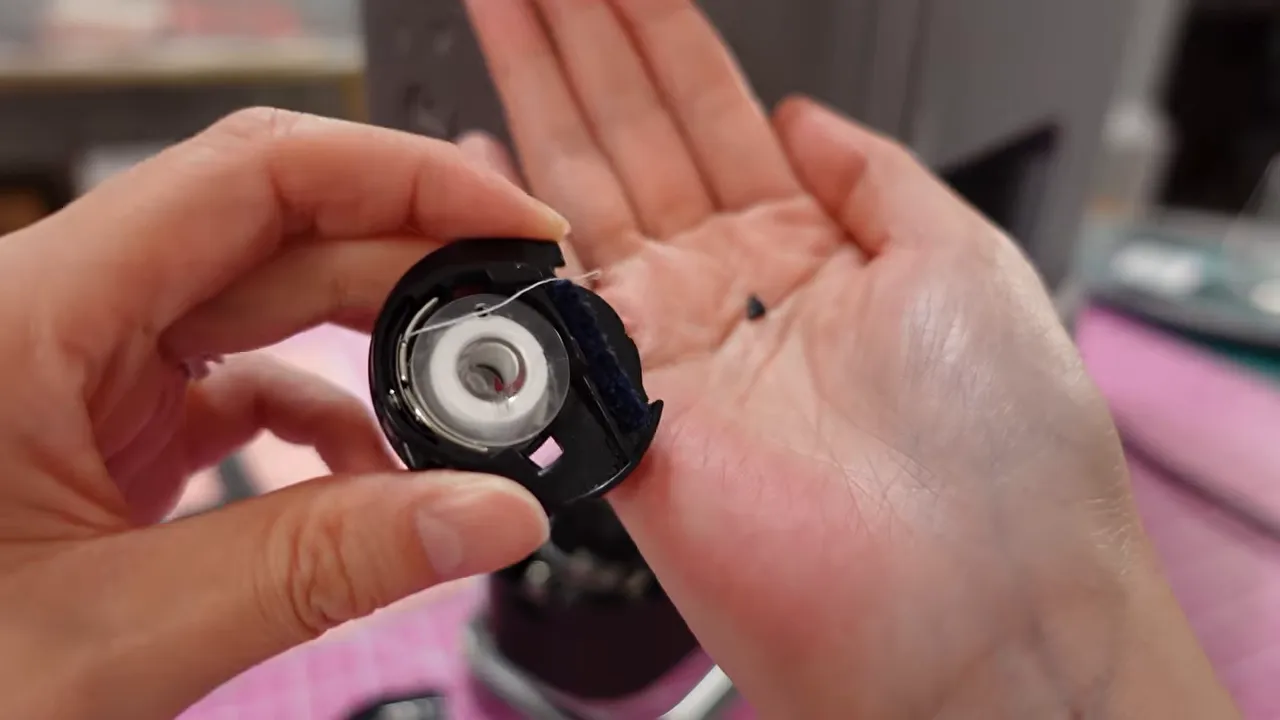
Then I noticed another area on the bobbin case that also appeared to be chipped or damaged. I don’t know when that happened. I hadn’t noticed it earlier, and I can’t explain how it got that way.
That leaves an important distinction: I know the bobbin case is damaged, but I do not have a diagnosis of everything that may be wrong with the machine. This is my account of what happened, not a repair tutorial or a recommendation to adjust your own bobbin tension.
How It Compared With My PE900 Bobbin Case
I took out the PE900 bobbin case to compare the two. They look quite similar, but they are not identical. There are differences in their construction, and, to me, the PE900 case feels sturdier. The plastic on the Skitch case feels cheaper by comparison.
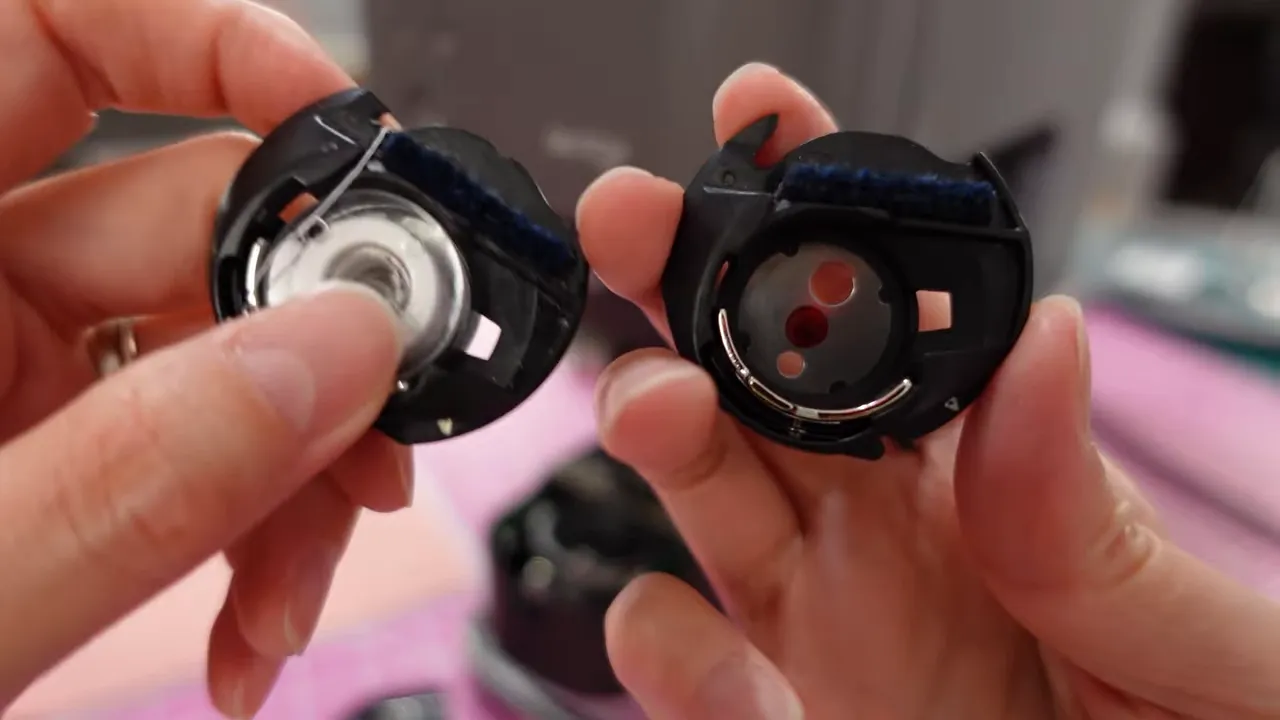
That is my hands-on impression, not a materials test. Still, with a broken part in one hand and an intact comparison in the other, it was hard not to notice.
I also found that the PE900 bobbin case would physically fit into the Skitch. I did not try stitching with it. Physical fit does not establish that the parts are interchangeable, and the cases are visibly different. I wasn’t about to turn one machine’s problem into another experiment with an unconfirmed replacement part.
One Letter Design Jammed Twice and Broke Two Needles
The damaged bobbin case wasn’t the end of it. I put it back into the machine, and the Skitch could still stitch some designs. But one particular design turned into a repeated failure.
I was using a block-style letter M through the Artspira app. Nothing especially elaborate, and it was a design I had stitched on the Skitch before without remembering this kind of trouble.
This time, when the machine reached a particular area near the lower part of the letter, the needle jammed and the thread tangled into a rat’s nest. Then the needle broke.
The first time, I thought it might be a fluke. I got a fresh sample and tried again. Within a few minutes, the same thing happened in the same area. Another jam. Another broken needle.
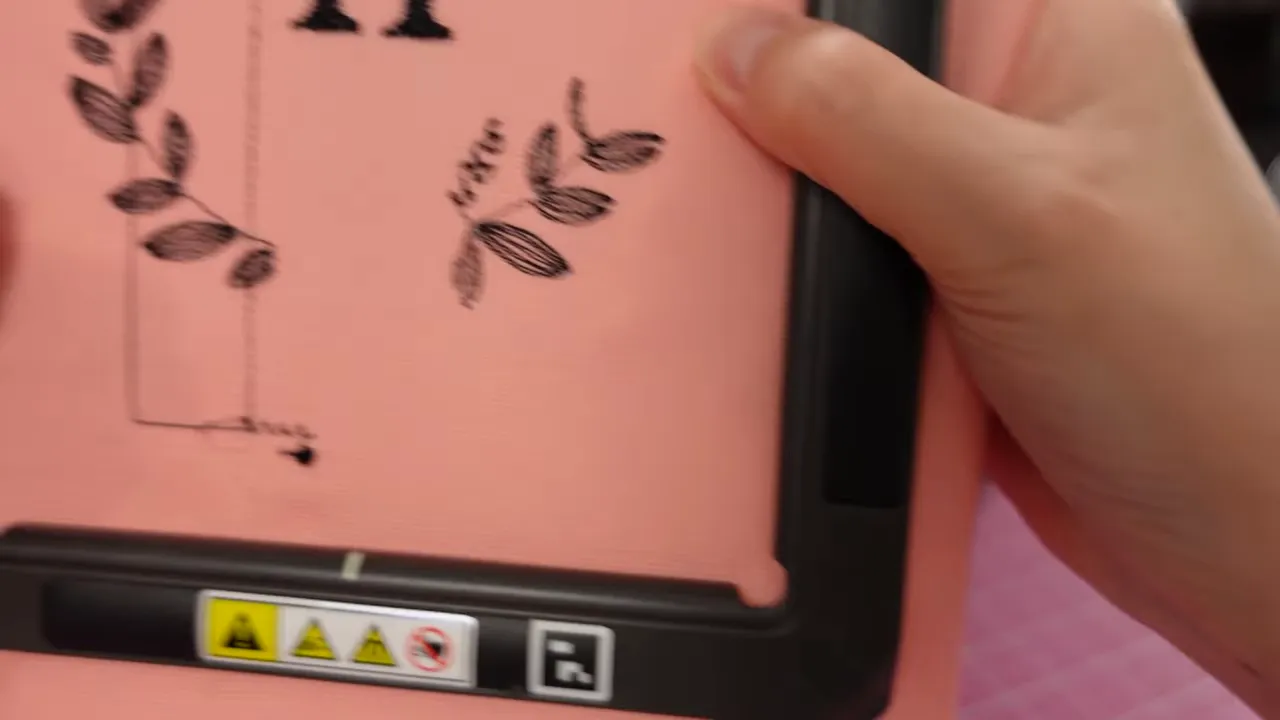
Unfortunately, the needle also struck the embroidery foot. That left a visible gash and a rough spot in the metal.
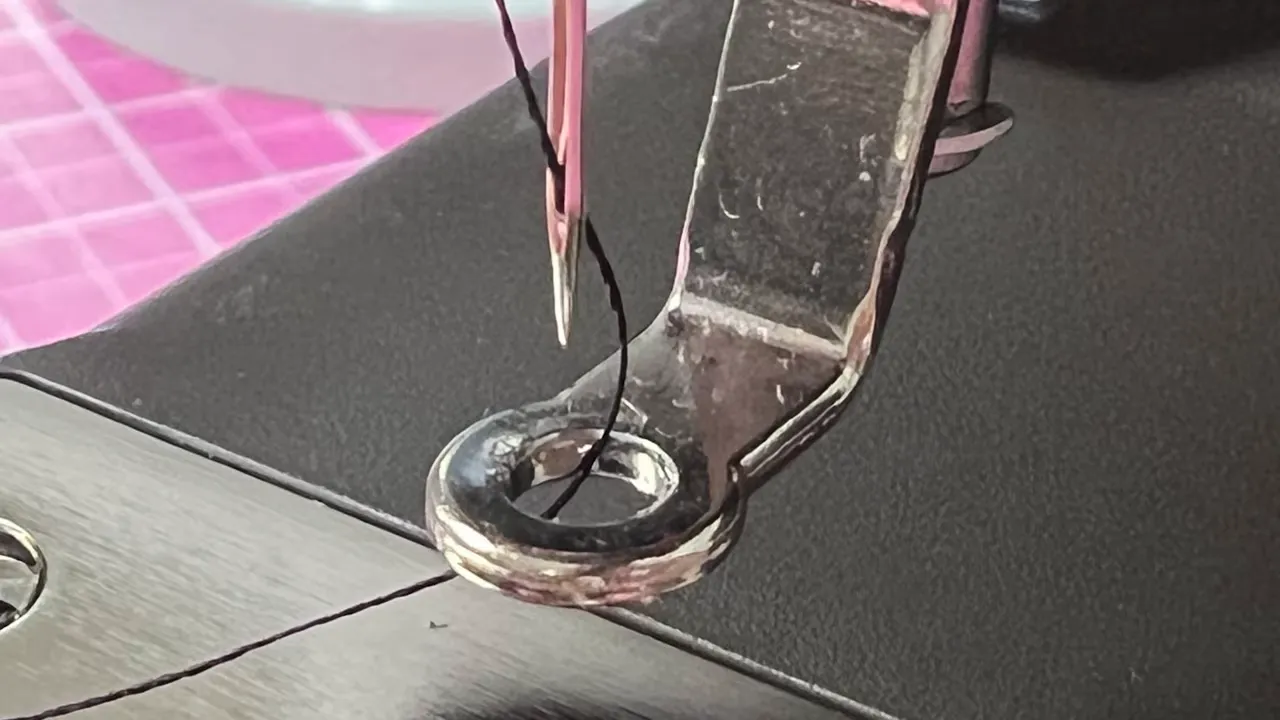
So now I have two known damaged parts:
- The bobbin case: a piece broke off, and another area appears chipped.
- The embroidery foot: the needle strike left a rough, damaged area.
I tried some other designs on the same sample, and those did stitch. That makes the situation more frustrating, not less. The machine is not completely incapable of stitching, but I don’t know why this design failed twice or whether something else is going on internally.
I’m honestly a little afraid to use it now. With the Skitch, it feels like there is always something, and I never know what the next problem will be. I can’t confidently put a project on it and expect things to go smoothly.
Trying to Get Brother Skitch Replacement Parts
My next step was contacting Brother customer support through live chat. I explained that I wanted to inquire about replacement parts. The agent told me I needed to contact a Brother authorized dealer.
There are a few in my area, so I called one. I want to be clear that this was one dealer’s response, not a claim about how every Brother dealer handles repairs or parts inquiries.
The shop offered a free estimate, but they wanted me to bring the machine in before discussing pricing. They wouldn’t give me any idea of repair costs over the phone. I couldn’t even get a general price for a replacement bobbin case.
I understand that they wanted to inspect the machine. What bothered me was that I was trying to gather enough basic information to decide whether a visit was worthwhile, and I wasn’t getting much to work with.
The conversation also felt a little condescending. When I explained what a replacement Skitch would cost, the person I spoke with characterized it as a plastic toy and pointed out that they carried much better machines.
That left me feeling as though the visit might turn into an upgrade pitch. That is my suspicion, not something I can prove about their intentions. But it did not make me especially enthusiastic about bringing the machine in.
If you need help with your own machine, the appropriate starting point is the Brother Product Support Center. Brother also provides an official support site for model-specific resources. I’m not a sewing machine technician, and I can’t diagnose individual machines or guide someone through a repair.
Is the Skitch Worth Repairing?
This is where the math gets awkward.
I paid about $500 for my Skitch. At the time of this update, I was seeing new ones advertised in the $300 range at multiple online retailers. Those are the prices I found then, not a guarantee of what it costs now.
I’ve also seen mixed reviews. Between those and the markdowns, I wondered whether the machine was selling particularly well, but I don’t have sales figures. A discount by itself doesn’t answer that question.
What the lower replacement price does affect is my personal repair budget:
- What I originally paid: approximately $500.
- The new-machine prices I was finding: around $300.
- My repair concern: a service and repair bill above about $200 would be difficult for me to justify.
That $200 figure is not a quote from the dealer. It is the point where, for me, spending money on this particular machine starts making very little sense compared with the price of a new one.
And even then, the decision is not just about replacing two parts. I’d want to know whether there is another problem behind the repeated jams and needle strikes. Spending money without understanding why it happened would not restore much confidence.
Where Things Stand Now
My plan is to take the Skitch to the dealer for an assessment and find out what they say. At this point, I do not have a confirmed diagnosis, a parts price, or a repair estimate.
For now, I’m treating the machine as out of commission. Yes, it has still stitched some things with the damaged bobbin case back in place. No, that does not mean I’m comfortable trusting it with a real project.
I’m also planning a more detailed look at my almost-three-year experience with the Skitch. This is the immediate problem report, not the final verdict on every feature the machine offers.
But the biggest issue is already clear: a clever design and a nice magnetic hoop do not make up for a machine I can’t rely on. I want embroidery to be fun, not a guessing game about which part might fail next.
Maybe the inspection will reveal a sensible path forward. Maybe I’ve got a rather expensive Brother paperweight. Right now, I’m not sure, and I’m not ready to put more money into it without answers.


